
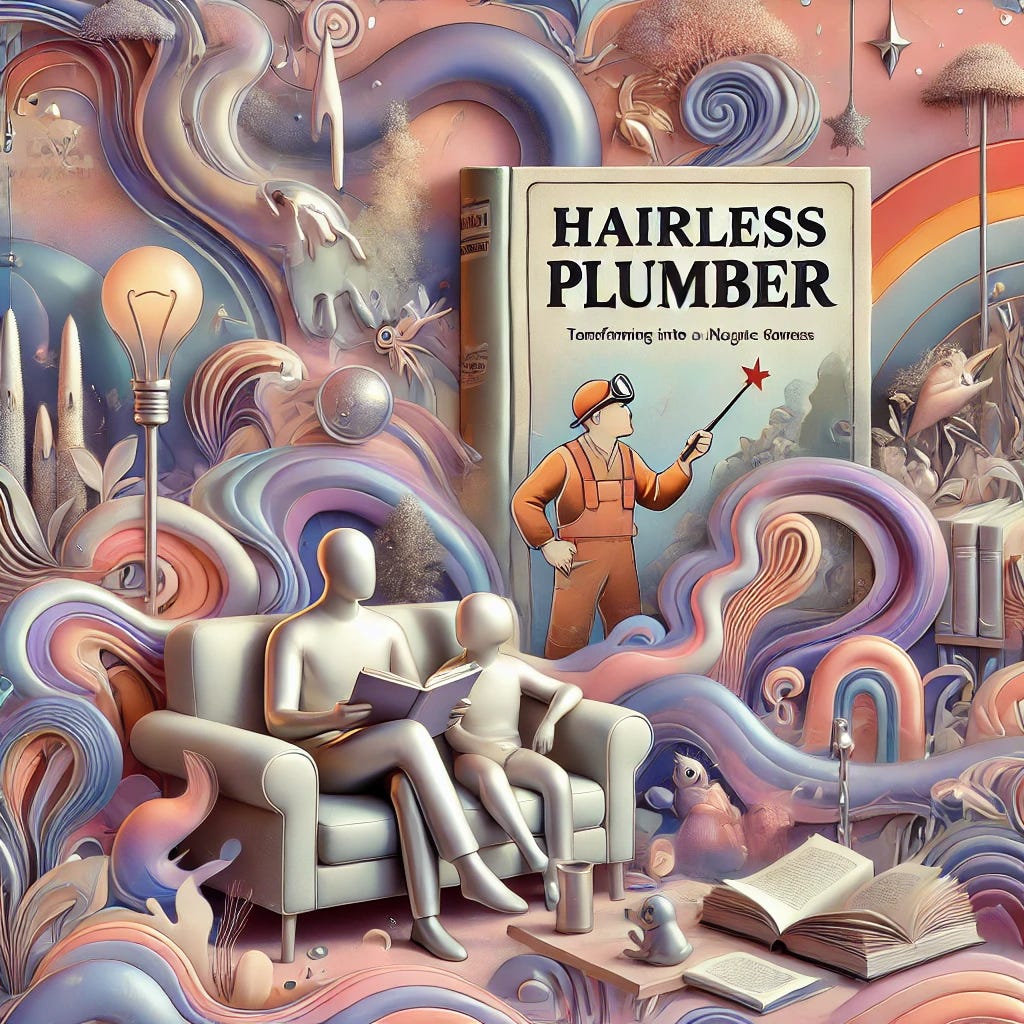
I’m just like the next person. I’ve spent countless hours enjoying the magical worlds of children’s literature with my kids. I’m talking about Harry Potter, Artemis Fowl, and Percy Jackson and the Olympians. I do have an intention to create a hilarious spinoff about a secretly gifted boy called Hairless Plumber, but that’s for another day.
The Patriarchal theme
A disturbing recurring pattern has emerged as I’ve experienced these fantastical worlds. One that seems to be highlighting a deeply ingrained patriarchal framework. These stories, while deeply enjoyable and engaging, predominantly feature white, male protagonists who often resort to acts of violence or aggression to restore or maintain peace. Ever notice this?
I have two young daughters. I wonder what this narrative trope perpetuates in their heads. How does this reinforce the idea of male dominance and the traditional hero archetype?
If you remember, in each of these tales the central character is a gifted, incredibly smart, white male conquering evil in some fantastical way. Part of me questions ‘what’s the harm in that?’. If you know of any series that changes this narrative in a significant way I’d love to hear in the comments below. Hunger Games doesn’t exactly count, due to its teen target.
What I’m concerned about here is the consistent albeit subtle reinforcement of male hero extends quickly to societal roles. Even though written in fantastical worlds the protagonists often utilize their strength, wit or supernatural abilities in combat, continuing to reinforce this idea of male aggression as an acceptable, even necessary means to achieve peace and order. And I simply question that assumption.
The repetitive nature of this theme is frightening. Where are the stories that challenge traditional notions of masculinity and power dynamics?
If you dig deeper into these narratives, it gets chillier.
Artemis Fowl has a black butler/servant. It seems like the only point of Percy Jackson’s mom is to support him becoming a full capacity demiGod. Harry has female sidekicks.
What if we could flip the traditional narrative, imagine a story where the male characters are primarily supporters or caregivers, and the female characters are the adventurers or leaders?
Moana: An alternative
Moana has this reverse perspective - and it stands as one of my favorite animated films so far. I love how Te Kā, initially the antagonist, is a fiery lava monster guarding the islands. In the climactic scene, Moana recognizes that Te Kā is actually Te Fiti, a nature goddess who lost her heart. By restoring Te Fiti's heart, Moana transforms Te Kā back into her peaceful, verdant self, resolving the conflict through empathy and understanding rather than violence. This act symbolizes healing and restoration, showcasing a powerful moment of connection and peace. Beautiful.
In the grand scheme, these stories seem to reflect deeper cultural scripts about gender and power. Media doesn't just entertain; it educates us and indoctrinates us.
And just as biodiversity strengthens an ecosystem, narrative diversity can strengthen cultural resilience and empathy. Introducing varied stories for me is like planting different types of plants; it enriches the environment and makes it more inclusive and representative.
Ultimately though it's about bringing to awareness these subtle themes that go unidentified and been mirrored through empire for 100s of years. Using this knowledge of the one-sided approach to these narratives is important for reflecting and shaping a more equitable society.
Thanks for reading.
Great insights, John. I remember the book series about the female spider who was only trying to relate to the other insects, not eat them, and I believe it was called “Miss Spider,”
I love this! I have 2 young girls myself and much of what we watch are from Asian movies and anime. The characters are much more developed and the story lines are much more complex. Characters aren't simply good or evil, moreover they have aspects of each. When we watch western movies we have discussions afterwards on how the characters could have compromised and worked through their problems with understanding. I find American entertainment limited and lacking. And I want my girls to know that male aggressive, dominant behavior is not the way. Men fight wars, women work cooperatively and try to find comprises. Look at violent crimes and prison population it is majority male. Even look at cultures, most women run cultures are better in every way. I have a feeling that the reason why the entertainment in America is so male aggressive forward is because those are the types of people running things. They run the movie and animation studios. Male majority cartoon artist. They own the news outlets and they run the politics, they even own the sports teams. Male CEO's. I could go on and on. I want a better society for my girls. One that is inclusive and gives them every opportunity a man has. I hope their are protections for them as well. I see the issue is changing the who's voice is being heard and who's is not. Women have not been heard for generations and still do not have the rights or equality that a man does. Even womens health issues have not been researched. Why? Because men have run things and have researched selfishly only for themselves. I think these things are the bigger picture and why we have these themes.