
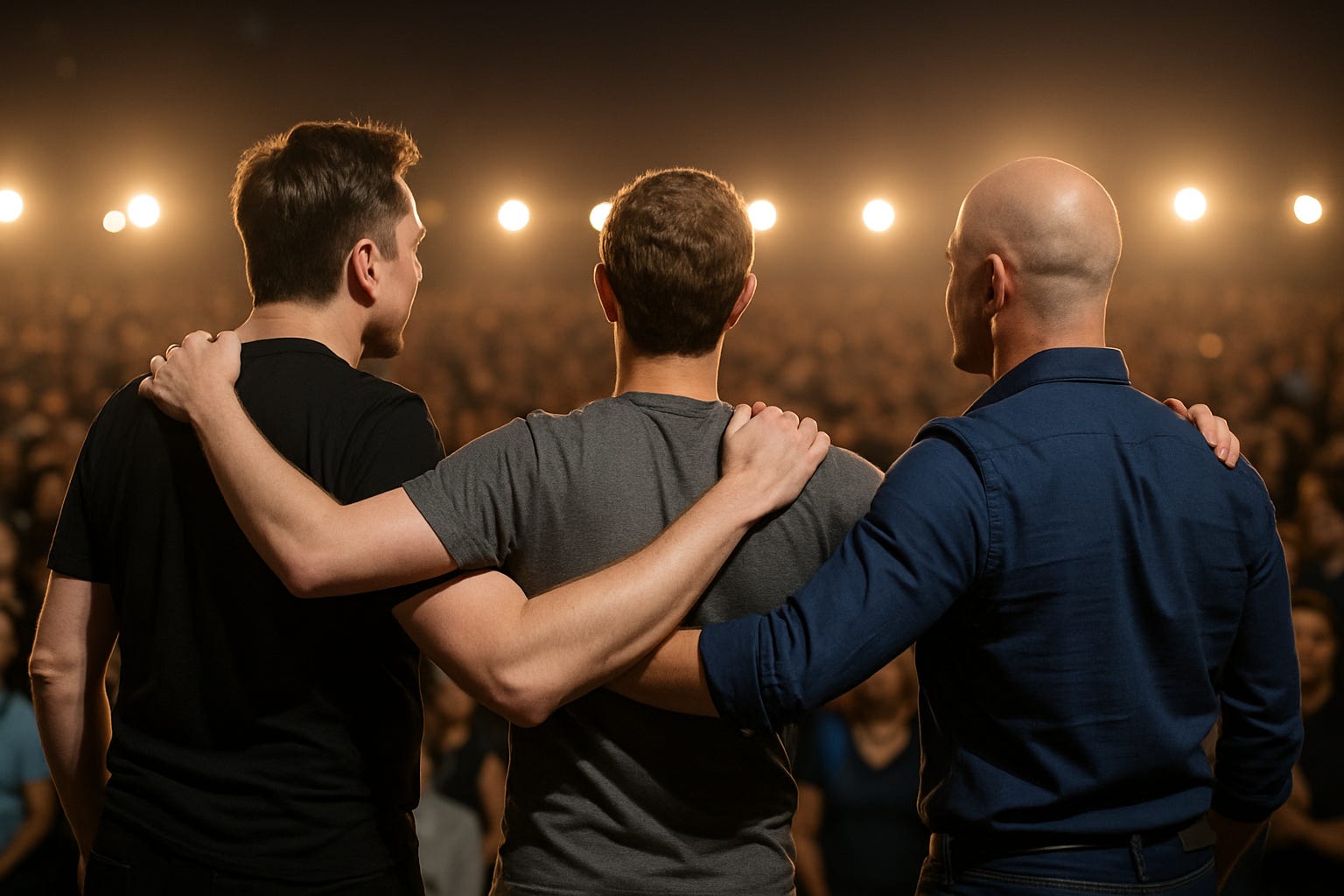
Sometimes, it feels like certain people stop being just individuals and start becoming avatars of something larger. It’s as if their identities are swallowed by the very ideologies they represent, and they start walking, breathing, and living as embodiments of those forces.
Take Elon Musk, Jeff Bezos, and Mark Zuckerberg, for example. These aren’t just businessmen—they’ve become something much stranger. They are capitalism itself, animated and brought to life. Each one reflects a different facet of the system, a particular way that capitalism manifests in our time.
Jeff Bezos is the embodiment of hyper-efficient consumption. If capitalism were distilled into a single command, it might read: “Sell everything on earth and deliver it to your doorstep yesterday.” Bezos made that vision real. His Amazon empire isn’t just a company; it’s a mechanical behemoth that devours geography, labor, and time itself to turn them into the instantaneous gratification of human desire.
Elon Musk, on the other hand, represents capitalism’s obsession with unending progress and utopian visions. He is the evangelist of a future that will always be better—no matter the cost. Colonize Mars, build electric everything, connect brains to machines—it doesn’t matter if the vision strains reality or the ethics get blurry. Musk is the dreamer, embodying the ethos that there’s always more to achieve, more to disrupt, and no such thing as “enough.”
Then there’s Mark Zuckerberg. He represents the colonization of human attention and thought—the new frontier of capitalism. Yes, he farms human attention pretty successfully (facebook marketplace anyone??). Through Facebook and the attempted metaverse, he now has a new goal: AI being your best friend. You can’t make this shit up. He has turned our very minds into commodities. He doesn’t just sell products; he sells the essence of our cognitive lives, packaging and reselling it in infinite feedback loops. In Zuckerberg’s world, even the moments we think we’re offline are being mined for profit.
Seeing the Puppet Strings
What’s unsettling about these men is not just what they do, but the way they so fully are what they do. It’s hard to see them as separate from the ideologies they represent. They’re not simply capitalists in the sense of pursuing profit—they’ve become the very structure of modern capitalism in human form. Bezos isn’t just a CEO; he’s the god of logistics. Musk isn’t just a tech innovator; he’s the gospel of disruption. Zuckerberg isn’t just a social media mogul; he’s the architect of cognitive commerce.
And once you see this, you can’t unsee it. They are almost mythological figures, but not in the aspirational sense. They are warnings. They remind us that ideologies, when taken to their extremes, can hollow people out and wear them as masks. These men have become capitalism’s mask, each one reflecting its relentless logic in their own peculiar way.
Why This Matters
What does it say about us that our culture elevates individuals who embody capitalism to such extreme degrees? Are we celebrating them or warning ourselves through their rise? It feels strange to witness—disturbing even—because it forces us to confront the ways we are all complicit in the systems they represent. Bezos thrives because we crave convenience. Musk soars because we’re addicted to the promise of progress. Zuckerberg profits because we can’t stop scrolling.
When we see these figures not as people but as walking ideologies, it raises uncomfortable questions. Is this the inevitable end of capitalism—to not only shape systems and economies but to consume individual identity itself? And what happens when other ideologies find their avatars, their masks?
Perhaps the most haunting thing is how natural this all seems. These men didn’t seize power in a vacuum. They rose because we, collectively, wanted what they had to offer. That realization—that they are reflections of us—is the part that feels hardest to unsee.
Really enjoyed this, John! Where we fix our gaze seems to amplify. We want what they offer…you nailed it.