

As Washington D.C. increasingly felt less like home, Knoxville emerged as a promising new chapter in our lives. The allure of this city was multifaceted: it was closer to Meggan's family, and she had connections with United Pursuit, a Christian grassroots worship band. She knew them before they became widely recognized, a time when they were known for their charismatic spiritual presence and an authentic, non-corporate style of worship. This connection to United Pursuit and the city's proximity to family made Knoxville feel like a natural next step for us. Our inclination was further solidified after spending a weekend in Knoxville with the Ketterers, a large family instrumental in guiding the movement. Their warmth and guidance cemented our decision to make the move.
Connecting with United Pursuit and Community Dynamics
Immediately we connected with United Pursuit (UP) and the surround community. UP was meeting every Tuesday evening to have prayer and worship unaffiliated with any official organization. This felt raw and powerful, an organic expression of christian spirituality very similar to my experience at college. And others in christianity felt it too - driving state’s away to participate on Tuesdays.
We both resonated with the emphasis in the community on relationships for their own sake. This was a community that didn’t have an overt missional preoccupation (marketplace ministry!) and instead tended to focus on authentic worship expression and relationships.
A glimpse into the later part of those days:
We entered just as the UP community began going through its own identity crisis: the organic house gatherings had grown immensely and there was confusion on how to manage this influx of people. We were able to sit in on the band and the close community processing about the dilemmas of growth, the purpose of a smaller focused group (outside of Tuesday nights), who would be a part of this group, and what direction the movement was taking. Many of the community felt discontent and communicated feeling on ‘the outside’ of decisions and direction. There seemed to be insecurity from members regarding who was the close circle with the people making decisions (United Pursuit band members) and who wasn’t. There was even some confusion as to who the ‘band’ was - the United Pursuit name implying a broader community approach. The band frequently presented various decisions and topics for discussion, but ultimately, it was Will Reagan, Nathan Fray, and Brock Human who, possessing the necessary resources and decision-making authority, finalized these decisions.
The general organic nature of the community was an incredibly refreshing change from our DC church. I remember having gone to Will Reagan’s wedding and watching Nathan Fray share his speech as the best man. There was a powerful bond between him and Will, a depth of connection. I think the way they partnered in riding this ‘new wave’ of charismatic Christianity through the art of music was fascinating, intriguing, and attractive to me, although i couldn’t have articulated that at the time. This didn’t reek of a business agreement or a transactional ministry partnership, there was something deeper going on.
A change to the community
The Ketterers, the family who seemed to be a central relational pillar to the community, had taken in a set of foster boys. Ending up with six kids, only one of which was biological they were on a crazy emotional and needs rollercoaster. Working through the complexity of the foster experience brought the community closer around them, supported them as the craziness factor in day-to-day life continued to climb higher. Many of their kids were coming from extreme neglect and abuse situations. In the first year or so of us moving to Knoxville the Ketterers shared the sad news that they had decided to move to California. This came as a shock to everyone, especially with their central staying power in leading the gatherings (we mostly met at their house for the private community meetings and Michael Ketterer consistently helped lead Tuesday night worship).
As we said our goodbyes we didn’t realize we were saying goodbye to the community they were pivotal in supporting and holding up. There seemed to be a void of leadership energy with their departure. Within the next year the UP band began to fatigue filling the weekly spiritual leadership role of Tuesday night worship leaders. It seemed that no one would clearly fulfill the Ketterer’s spiritual authority. A series of home church gatherings at various houses reached for keeping the fire of the UP community lit and a sense of community and group gathering. But the tipping point had been crossed. Will Reagan, the lead singer for Tuesday evenings no longer wanted to lead every Tuesday; the purpose of the evening seemed to be fading for him.
As our family grew to include three children, experimenting with singles at house churches became increasingly challenging. The constant need for attention from our little ones, along with their requirement for playmates, made this difficult. Additionally, our social circle mainly consisted of people who were either newly married or single, prompting us to seek a broader community for both ourselves and our children.
At the same time, we were approached by the Ketterers before their move to California. They asked us to become foster-authorized, as they were in the midst of legally adopting some children and might need a temporary 'respite' home for them during their transition to California. A 'respite' home is a foster-approved residence where children in state care can stay temporarily. We excitedly agreed to be that home for their family if the need arose, honored to be asked to be such an important support element for them.
Opening up to foster care
The six week foster training opened my eyes. This experience triggered a deep reflection on my life: how little energy i had directed to the marginalized. And this was a deeply convicting realization. A core part of Christ’s message, himself demonstrating his identification with the poor and marginalized more than any other people group. And yet I had spent so little of my energy in that way. An awakening was happening to me. I realized how much my spirituality had been anchored in structured religious activities - worship sessions, teachings, Bible studies, recreational gatherings, conferences, and discipleship programs. This focus on organized events and studies shielded me from directly addressing the fundamental needs of the world. I had rationalized using the conventional mental models of our time: functional specializations. Praying for these needs was an adequate substitute for hands-on service because i was performing the intersessional function of christianity. Some other people will do the hands and feet thing. This realization was a pivotal moment of self-awareness for me. The call to foster children became more than just a contingency plan for the Ketterers; it became a personal mission for me.
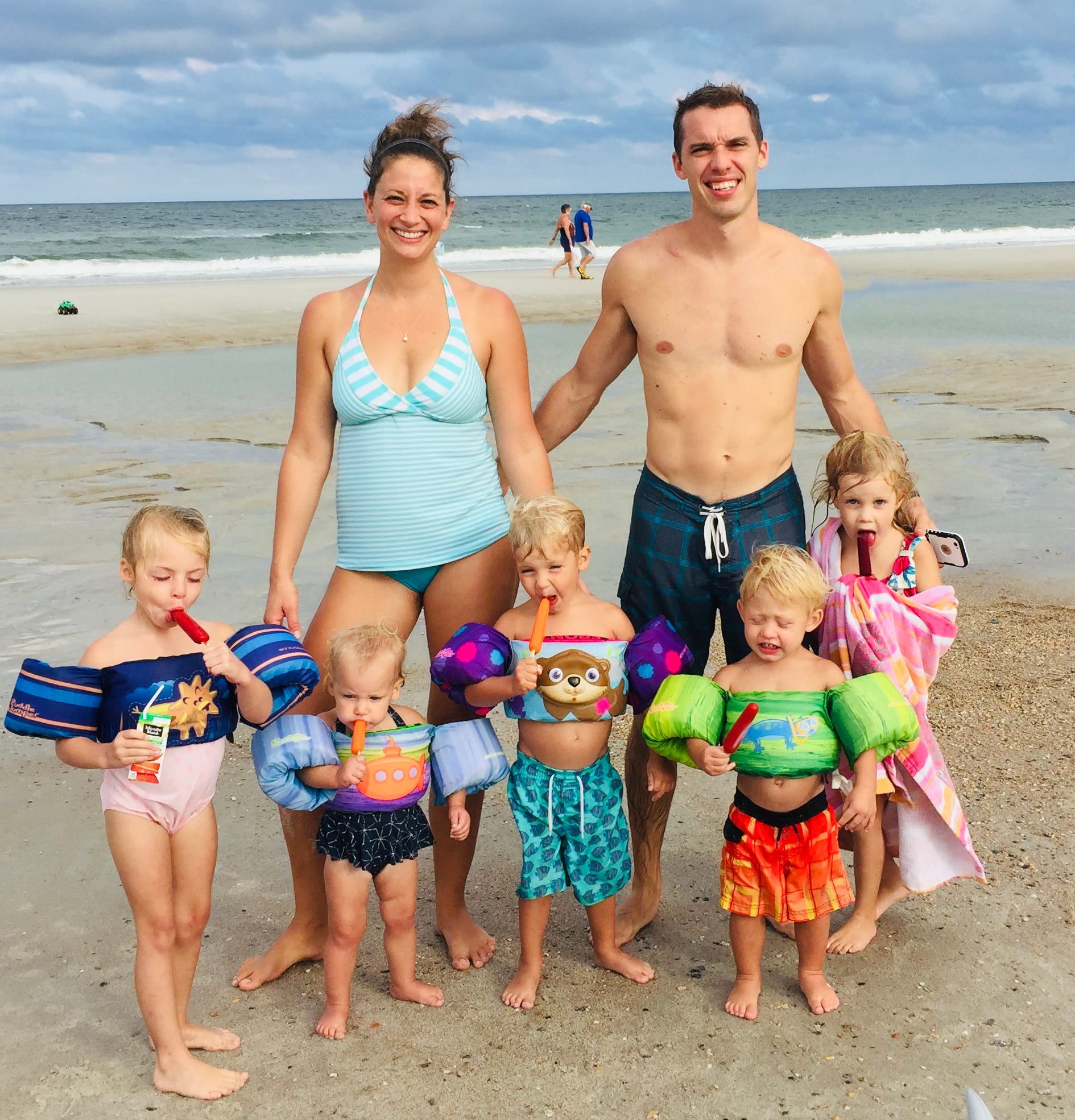
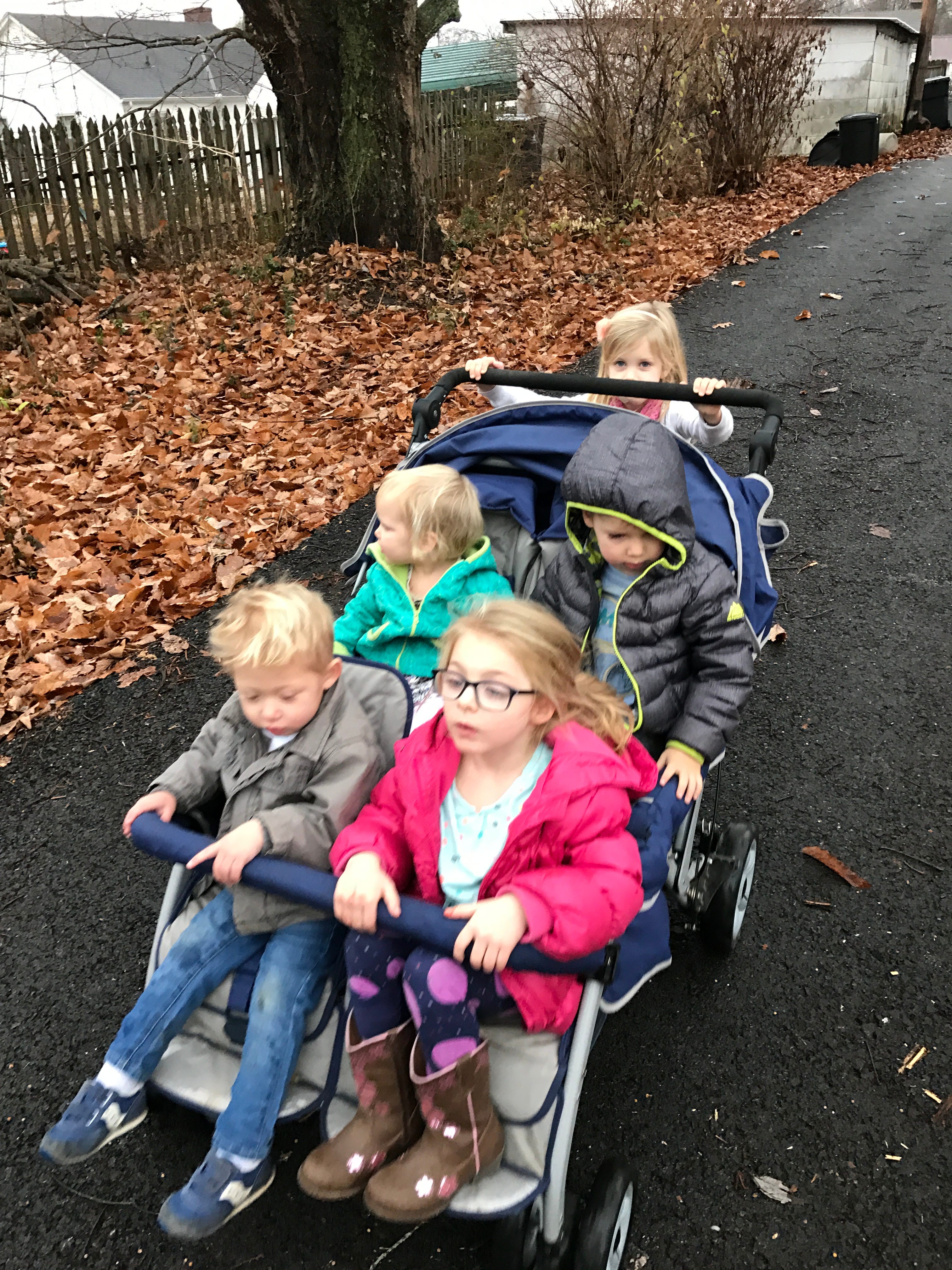
We were open to fostering children younger than our oldest child, Anna, who was 5 at the time, with Gabriel at 3 and Elise at 1. This reduced our chances of getting children, since many were older than this. But we had our chance! We welcomed two sets of children into our home. The first set comprised Matty, a 6-month-old boy, and Gracie, a 3-year-old girl. Matty, significantly behind in his developmental milestones, slept for extended periods upon arrival. Gracie had multiple health and sensory issues. Before we could fully integrate them into our family, they were unexpectedly taken back, having stayed with us for less than two months.
Before we had fully processed the departure of the first set of foster children, we were presented with another opportunity to foster two more kids. In Tennessee, foster care operates in a rather immediate manner: you receive a call at any hour with information about children who have just entered state care. They provide the names and approximate ages, and then wait for your decision. If you don't respond quickly, often based on gut instinct, they move on to the next potential foster home. Faced with this urgency and listening to our sense of what God was saying, we said yes to this next opportunity.
We welcomed Lilley, aged 4, and Ronnie, aged 2. Both children had significant needs and required constant attention, redirection, and love, typical for children who have experienced trauma. Foster children are very similar to refugees: they usually come with nothing but a black trash bag of their belongings and very little history (we were surprisingly corrected after a few weeks of calling Gracie by her legal name. She corrected us letting us know “my name is Gracie”).
This period was one of the most challenging in my life, equaled only by the next season (my next part). I held a firm belief in the possibility of divine intervention in our ministry to these hurting children, trusting that God would heal the fatherless and helpless. However, the reality was a bit different. What I mostly experienced was a cycle of personal frustration, anger, and hurt due to the relentless demands of our new foster children on top of our already full lives. We were filled with foster meetings, medical, developmental and therapy appointments, and dealing with continual emotional needs. I became exhausted, struggling to meet the needs of the foster children, our own family, an overtaxed wife and my own needs. It became clear that my own needs were the easiest to disregard.
A tear in the matrix
This experience marked a rip in the matrix, a tearing of a reality i had held and the beginning of a disillusionment with the version of dogmatic charismatic Christianity I had been practicing. This melting version of Christianity believed in the supernatural intervention of a divine being to help the innocent and the hurting. This expectation of a divine caring presence continually got shattered and instead my own overwhelming emotions took its place. It was a slow process, but it was the start of a significant shift in my beliefs and perspectives.
Correlated career shifts
During this period, many of my friends embarked on entrepreneurial ventures, launching their own businesses in fields like videography, real estate, and music. The prevailing mindset was one of dreaming big and forging an independent path. I was captivated by this spirit and supported numerous solo entrepreneurs by leveraging emerging technologies, which the broader internet was helping revolutionizing how businesses could rapidly expand and develop. This era was marked by a shift away from reliance on large institutions, reflecting a broader question framed against society: “Can the larger institutional giants fall to the eager Davids?”. This was the question the UP band seemed to be questioning in the domain of christianity. And it seemed to be working.
Eager to be a part of this change, I experimented with various side projects to transition from my corporate consulting role. I started working as an independent contractor, opting for hourly pay instead of a traditional salaried position, as a personal statement of moving away from the security and dependency offered by established institutions. I launched a consulting firm focused on assisting small businesses, partnering with my friend Randy Reagan. Randy had previously helped guide me in shifting from a position in Washington D.C. to consulting in Knoxville. His journey of self-discovery in christianity greatly enriched my own path. He was constantly reevaluating his relationship with Christianity, gaining new perspectives on spirituality, and exploring ways to integrate these insights into his everyday life.
Foster wind-down & new family member
Meanwhile Lilley and Ronnie our foster children found a long-term family placement and I sighed from relief. The load had been much heavier than anticipated. I had been left with the scars of a disappointed season, surprised at the grisly nature of my own negative and dark parts being revealed. I needed to catch my breath after fostering and I was ready to go back to the relative ease and calm of caring for our three kids. An incredibly straightforward load compared to what we had faced before, if you want to read between the lines of that statement.
After the intense experience of fostering children, we encountered a surprising dynamic. When the children returned to state care, our daily routine changed dramatically. We suddenly had more personal time and space, a stark contrast to the previous period of constant caregiving. This shift, which seems common in foster care, left us with a residual desire to nurture. Without realizing it, we were still seeking an outlet for our caregiving instincts.
So, what did we do? A few months after the foster children left, we decided to get a puppy. Bringing a miniature labradoodle into our home filled a void. The puppy brought us joy and provided a new focus for our nurturing energy. Of course, the puppy came with its own set of needs and training requirements, but this was a different, more joyful challenge compared to what we experienced with fostering. We wholeheartedly embraced our new furry family member. Little did we know we were about to welcome two more members to the family.

Present reflections during this time
Composing this part of my narrative proved to be more challenging than earlier sections. The difficulty seems to amplify as I delve into more recent events. This is understandable, as reflections on the not-so-distant past often stir more opinions, given their immediacy and relevance. I'm acutely conscious that members of the UP community who read this may have different interpretations and perspectives, all of which are valid and important. Additionally, I am still in the process of healing from this period. The intense demands of that time left a significant impact on my personal well-being, a debt I am still working to reconcile.
After being in the UP community for a year I began to realize how my DC relationships had degenerated into christian event-driven relationships - they mostly existed on a ‘what’s happening in the meeting now and what’s happening next’ in our joint ministry involvement. Real, authentic relational connections were rare in that season. I loved the return of the focus to being emotionally and spiritually connected to others in Knoxville and the focus on depth of relationship, for the relationship itself. Not on some leadership dependant vision or call. The Ketterers seemed to represent a pastoral energy that kept people together, caring and nurturing for people along the way. This took some time to recognize but the energy Michael and Ivy gave was one of a larger hope, purpose, and connection. They were also the only other family with older kids, a critical need for our small family. Most everyone else was single, newly married or just getting started with kids.
Looking back it seems like much of the energy behind Tuesday night’s “LoveWar” was Michael Ketterer. He held the vision for gathering and welcoming, people were attracted to his energy, and the UP band was happy to fit within that role. When he left it was up to the band to continue. UP lowered the frequency of Tuesday nights to once a month, keeping this cadence meeting at venues around Knoxville with 500-600 people attending a typical night with people driving from neighboring states to be able to participate. I got a lot of joy in these nights playing bass, being a part of a creative and spiritual expression - something i miss to this day. UP is amazingly gifted in using music to unify a group, spiritually accentuate the desire for the divine, and improvise in that direction. Each night seemed to be its own story that was co-told by the audience as well as the band. Many powerful times of worship and spiritual expression happened in those nights and it was personally very meaningful for me. Part of the beautiful expression was the lack of the need to go anywhere - which was powerfully magnetic and a unique position. There wasn’t an institution to sustain, coffers to fill or a vision to propagate. Just a space and medium for a bunch of people to have a spiritual experience through a shared musical medium.
I believe this is still hungered for. My experience with ‘missional’ communities (IHOP, JHOP, DC church, etc) had continued to go off-the-rails from abuses of power, narcissistic tendencies, or just plain differences in opinions about how to tackle the ‘mission’. Don’t get me wrong, I believe having a vision is an effective and highly efficient way to bring people together - announce your direction and ask ‘who’s with me?!’. The UP gatherings were different - no clear vision to tackle, no mission to accomplish, and no base to protect or establish. It pushed away an incredible amount of weirdness and hidden agendas that I believe people unconsciously make agreements with to be a part of a particular tribe. Regardless of whether they agree with everything in that agenda or not. It’s the accepted ‘tax’ of being a part of a spiritual tribe it seems. There isn’t a space for individual self-directed spirituality - only spirituality as dictated by a particular creed, denomination, or dogma. That is sad to me.
Personally I had an expression of artistic and spiritual outlet playing bass in the UP band - a crucial medium for my personality! But that medium began to close as even once a month became too much for the band. Their bedrock belief systems were shifting and no longer provided the needed energy around that expression it seemed. Brock (one of the main singers) also moved to CA (although a different area than the Ketterers) and the Tuesday worship sessions ramped down and stopped.
The UP band seemed to be undergoing a spiritual evolution, questioning traditional Christian doctrines. The strain of their Tuesday night commitment seemed to be one aspect of their broader theological and existential struggle. The members seemed to be increasingly seeking out diverse interpretations of faith, moving beyond the mainstream Christian consensus. I was privy to some of their profound inquiries through the books they shared. Works like Greg Boyd's "Repenting of Religion," Gregory Boyle's "Tattoos on the Heart," Richard Rohr's “Falling upwards”, "Breathing Underwater" and "Universal Christ," and Robert Capon's "Kingdom, Grace, Judgment," among others, significantly expanded my understanding of God, the Kingdom, and the Spirit.
These texts shifted my perspective from a rigid, narrowly defined doctrine to a more inclusive, holistic, and creative viewpoint. I devoted countless hours to reading these and other books, which aided in evolving my conception of a God who seemed to be gradually changing. This process was challenging as I tried to reconcile these new ideas with the beliefs I had been raised with. They ended up being instrumental for what lay ahead.
Love the contrasting description of your previous Christian organizations vs what you experienced with UP